The College Recruiting Roadmap
Stop Guessing. Start the Process.
College recruiting isn’t a lottery, it’s a verifiable process involving metrics, academics, and specific communication windows. We replace anxiety with a clear roadmap.
Understand the rules for NCAA D1, D2, D3, NAIA, and JUCO.
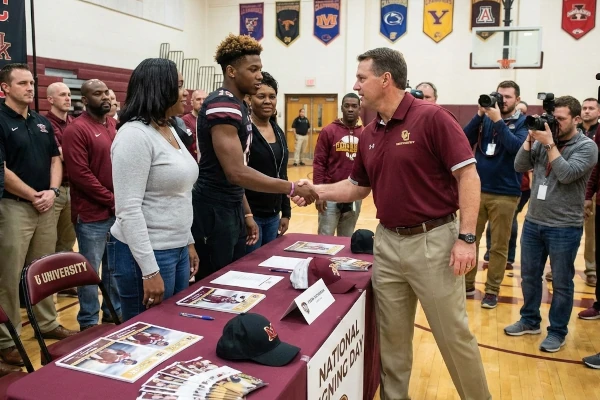
The Reality of Recruiting
It requires aligning athletic ability, character, and academics.
The 4 Pillars of a Recruitable Athlete
Before a coach evaluates film, they evaluate risk. We help you optimize all four areas coaches scrutinize.
Baseline
1. Academic Eligibility
It’s not just about GPA—it’s about Core Course requirements. D1 requires a 2.3 GPA in 16 core courses, while NAIA has different testing and class rank pathways.
Evaluation
2. Verified Metrics
Coaches trust third-party verified height, weight, and speed. “Eye-balling” it doesn’t work. A D1 Linebacker typically needs to be 6’2″+, while a D3 LB might be 5’11”.
Visibility
3. Digital Footprint
X (Twitter) is the primary tool for coaches. Your profile must act as a resume: clean highlight film (Hudl), GPA, and contact info in the bio. One bad post can cost an offer.
Outreach
4. Targeted Communication
Spamming coaches doesn’t work. You must target schools that match your athletic and academic level. Personalization is key—coaches delete copy-paste emails.
The Recruiting Calendar
“Is it too late?” is the wrong question. The question is: “What should we be doing right now?” The process accelerates every year.
The “Lock-In” Rule
Crucial for NCAA D1: You must complete 10 of your 16 core courses before the start of your senior year (7th semester). These grades are “locked in” and cannot be replaced.
Check Your Eligibility Status
9
Freshman Year: Build the Foundation
Focus on grades (Core GPA starts now). Begin unofficial visits. Research colleges. Attend camps for experience, not exposure.
10
Sophomore Year: Initial Contact
Create your online profile. D1 coaches can generally start sending recruiting materials and camp invites June 15th after sophomore year (varies by sport).
11
Junior Year: The Critical Window
September 1st: Direct contact period often opens. Official visits begin. If you aren’t hearing from coaches now, you must adjust your target list immediately.
12
Senior Year: Decisions & Commitments
Official visits. Verbal offers turn into National Letters of Intent. Finalize FAFSA (Oct 1). Secure your roster spot.
Target the Right Level
There are over 800 football programs across 5 divisions. You increase your chances of a scholarship by targeting the division that matches your verified metrics.

Physical Requirements by Division (Averages)
| Position |
Metric |
NCAA D1 (FBS) |
NCAA D2 |
NCAA D3 |
| Quarterback |
Height |
6’2″ – 6’3″ |
6’0″ – 6’2″ |
5’10” + |
| Running Back |
40 Yd Dash |
4.4 – 4.6s |
4.5 – 4.7s |
4.6 – 4.8s |
| Wide Receiver |
Vertical |
34″ – 40″ |
32″ – 36″ |
30″ – 34″ |
| Linebacker |
Weight |
225 lbs+ |
215 lbs+ |
205 lbs+ |
Note: D3 does not offer athletic scholarships, but offers financial aid packages based on merit and need.
Is my child actually recruitable?
Recruitability is a combination of academics, physical metrics, and character. If your athlete meets the metrics for D2 or D3, they are recruitable, even if they aren’t D1. We help you find that fit.
How is this different from a highlight video service?
A highlight video is just a file. We provide the strategy on who to send it to, when to send it, and how to ensure your academics (GPA/Core Courses) don’t get you disqualified before the coach even clicks “play.”
Does social media really matter?
Yes. Coaches use X (Twitter) to discover talent and investigate character. They look for red flags (bad language, poor sportsmanship).A clean, professional profile is a non-negotiable requirement in modern recruiting.
What about NIL (Name, Image, Likeness)?
High school athletes in some states can monetize NIL, but rules vary wildly. Signing the wrong deal can jeopardize college eligibility. You must verify state and association rules before accepting any money.
